What Global UPOS-211 POS Deployments Tell Us About Modern POS Requirements
02/10/2026
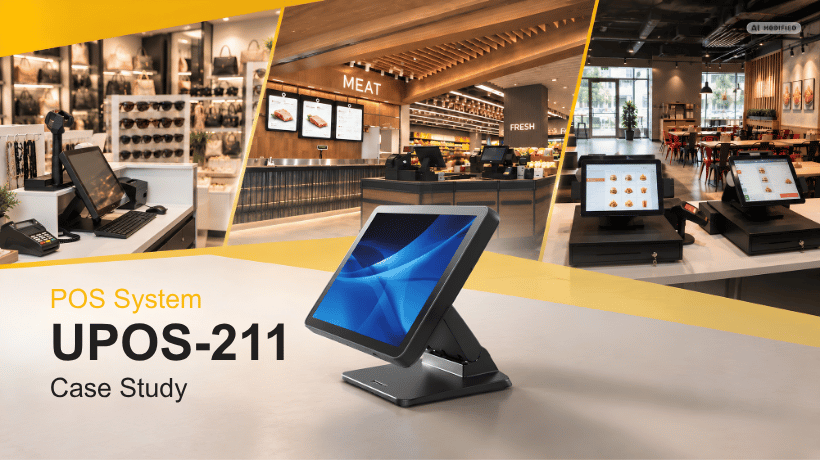
A POS terminal may look like standard retail hardware, but its requirements can vary widely. Supermarket checkouts, QSR kitchens, specialty retail counters, and integrated retail systems each place different demands on the platform.
Across Asia Pacific, Europe, and the Americas, Advantech’s UPOS-211 all-in-one POS system has been deployed for checkout, price checking, kitchen display systems (KDS), and integrated retail applications. These deployments show that POS selection involves more than processing performance, with reliability, compatibility, physical flexibility, and lifecycle support also playing important roles.
Grocery & Supermarkets: Different Touchpoints, Different POS Requirements
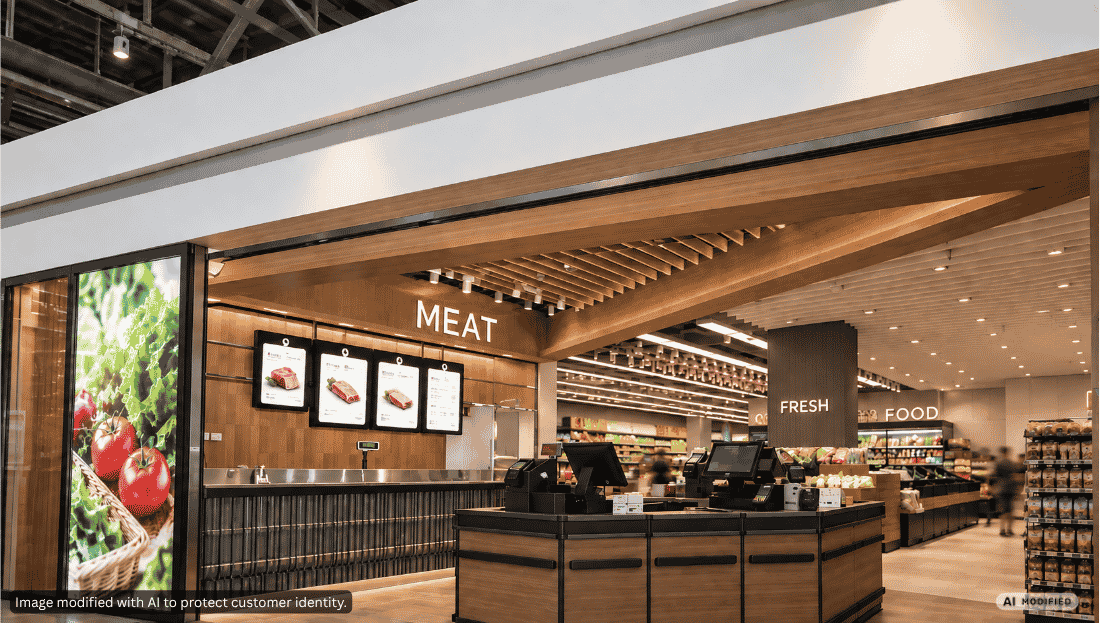
Grocery retail can require different POS applications within the same store, from staffed checkout to price and product information. The following successful realworld examples illustrate these issues.
- A supermarket chain in Hong Kong chose UPOS-211 to replace aging checkout equipment, prioritizing reliability, low maintenance, processing performance, and flexible screen positioning. Its foldable dual-pivot design also improved packing efficiency for multi-site deployment.
- In South America, another supermarket used UPOS-211 as a VESA-mounted price and product information checker. Barcode scanning and touchscreen input allowed shoppers to access pricing, stock information, product details, promotions, and discounts.
Together, these deployments show how one POS platform can support checkout, stock checking, and customer-facing applications.
QSR: One Hardware Platform Across Counter and Kitchen
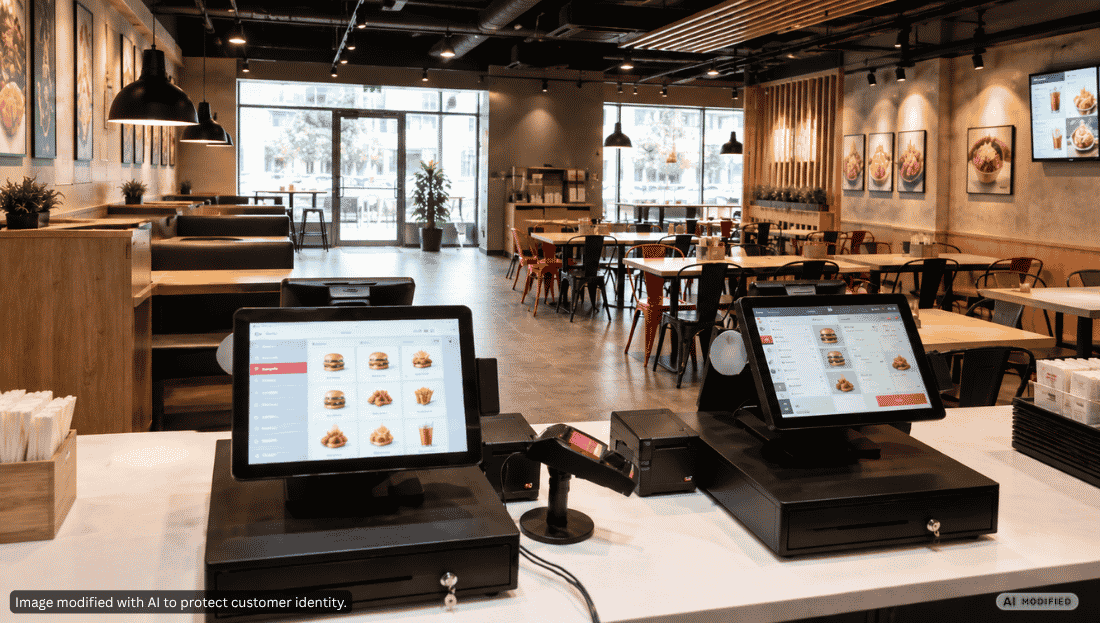
- Across several QSR deployments in South and East Asia, UPOS-211 was configured for both billing counters and kitchen display systems (KDS). In India, customized stands supported KDS applications, while systems were tested with customers’ existing software and hardware.
- An Indian coffee chain also prioritized IP65-rated front protection for kitchen use, while an international coffee chain in Greater China required adjustable screen positioning, processing performance, and IP65 protection. These deployments highlight the importance of compatibility, peripheral connectivity, mounting flexibility, and environmental protection within the operator’s existing ecosystem.
Specialty Retail: When the POS Has to Fit the Store
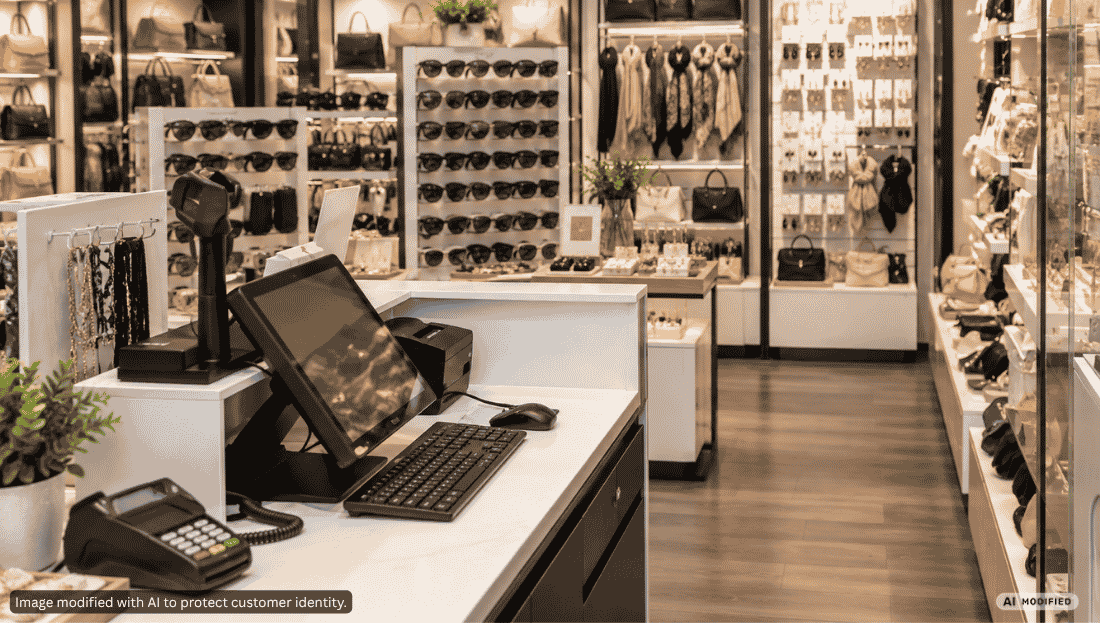
In specialty retail, POS hardware must fit the physical environment as well as meet computing and connectivity requirements. Counter space, appearance, cable management, and peripheral integration can all matter.
- A European jewelry retailer selected UPOS-211 for its processing performance, multiple interfaces, and compact design, with product appearance also considered important to complement the store interior.
- A premium liquor and tobacco retailer in Greater China similarly prioritized a clean checkout environment, using the dual-pivot design for adjustable viewing angles and expandable interfaces and cable management for different peripheral configurations. These deployments highlight an often-overlooked POS consideration: the terminal needs to fit the environment in which it is installed. Footprint, mounting, cable management, and appearance can therefore all influence hardware selection.
Embedded Systems: Longevity and Custom Integration
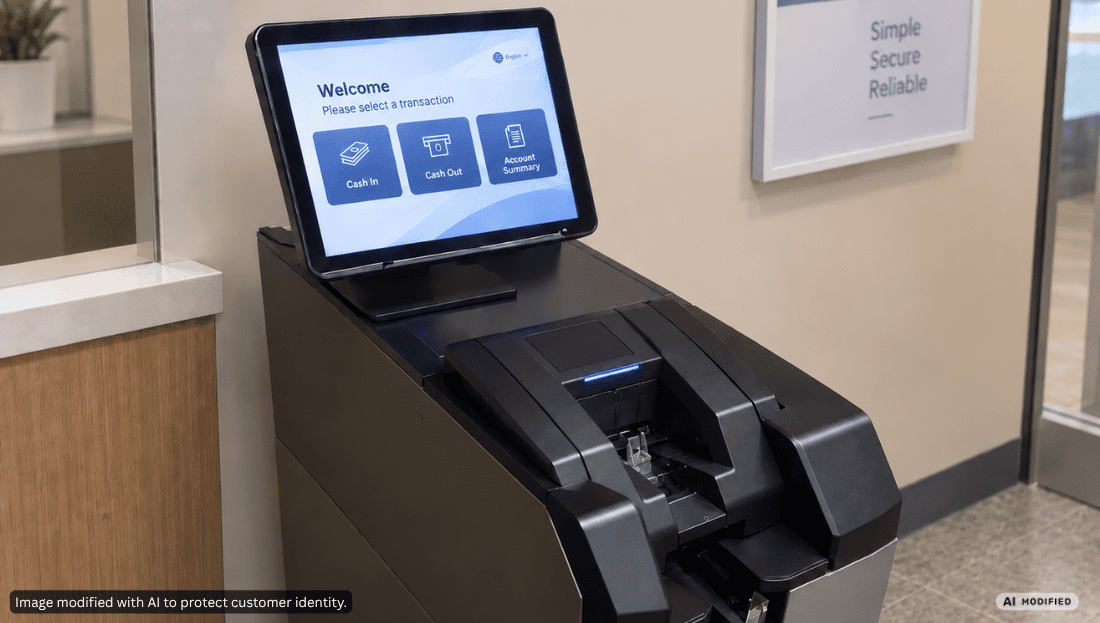
POS hardware can also become part of a larger retail solution, where integration and long-term availability can be as important as performance.
- In the United States, UPOS-211 was integrated into a lottery ticket control system requiring a 4:3 touchscreen, barcode scanner integration, customized configuration, durable hardware, and a product lifecycle exceeding five years because continuity was important to the broader solution.
- In another U.S. deployment, UPOS-211 served as the HMI for a large retail cash recycler, requiring a compact footprint, VESA mounting, peripheral connectivity, touchscreen durability, customization, local support, and long product availability because reliability and long-term stability were more important than having the latest hardware specifications.
These applications illustrate why product lifecycle matters when hardware is embedded into another system. Keeping a proven platform in service can be just as important as having access to the latest hardware, since replacement can affect validation, integration, mounting, and the larger solution’s lifecycle.
What POS Deployments Demand
Reliability and lifecycle: Stable, maintainable hardware with long product availability is essential for systems that operate for long hours or are integrated into larger solutions.
Integration and flexibility: POS hardware must work with existing software and peripherals while adapting to different installation environments. Compact footprints, VESA mounting, cable management, adjustable displays, and expansion options can all be important depending on the application.
Versatility and support: A common platform that can be configured for checkout, kitchen display systems (KDS), price checking, or HMI applications can simplify deployment across different operations. Configuration assistance, local support, and long-term service are also important for multi-site deployments.
For Advantech UPOS-211, flexibility means providing a common platform that can be configured around different software, peripherals, physical spaces, and operational requirements. From grocery checkout and QSR kitchens to specialty retail and integrated equipment, global UPOS-211 deployments demonstrate a common lesson: modern POS hardware needs to fit the operation, rather than forcing the operation to fit the hardware.
-25/pis_upos-211_0120240328181433.png)
-25/pis_upos-211_0120240403114027.png)
-25/pis_upos-211_0120240403151920.png)